Japanese beauty explained
Japanese Sunscreen vs American Sunscreen: Why the Difference Is So Big
If you’ve ever tried a Japanese sunscreen after using American ones your whole life, you already know. The texture difference is dramatic. But the differences go deeper than how the product feels: the UV filters, the protection ratings, and the regulatory frameworks are fundamentally different.
This isn’t about bashing American sunscreens. It’s about understanding why the gap exists and what it means for your skin.
The FDA Problem
The core issue is regulatory. The US FDA has not approved a new UV filter since the late 1990s. Meanwhile, Japan, Korea, Europe, and Australia have approved multiple newer filters in the decades since.
These newer filters (Tinosorb S, Tinosorb M, Uvinul A Plus, among others) provide stronger, more photostable UVA protection. They allow sunscreen chemists to create lighter, more elegant formulas while delivering better protection.
American sunscreen manufacturers are stuck working with older filters: avobenzone (which degrades in sunlight without stabilizers), octinoxate, homosalate, and a limited list of others. These filters work, but they have limitations that newer filters were specifically designed to overcome.
There have been legislative efforts to modernize FDA sunscreen regulation for over a decade. Progress has been slow.
UVA Protection: PA++++ vs “Broad Spectrum”
Japanese sunscreens display a PA rating (PA+ through PA++++) that tells you exactly how much UVA protection the product provides. PA++++ is the highest grade, indicating a UVAPF of 16 or more.
American sunscreens say “Broad Spectrum” if they pass a minimum UVA protection threshold. But “Broad Spectrum” is pass/fail. It doesn’t tell you whether the UVA protection is barely adequate or extremely strong. A sunscreen that barely passes and one with excellent UVA protection both display the same label.
UVA rays cause about 80% of visible skin aging (wrinkles, dark spots, loss of firmness) and contribute to skin cancer. Knowing how much UVA protection you’re getting matters, and the Japanese system communicates this clearly while the US system doesn’t.
For a deeper explanation, see What Does PA++++ Mean?
Texture and Wearability
This is where Japanese sunscreens are most obviously ahead.
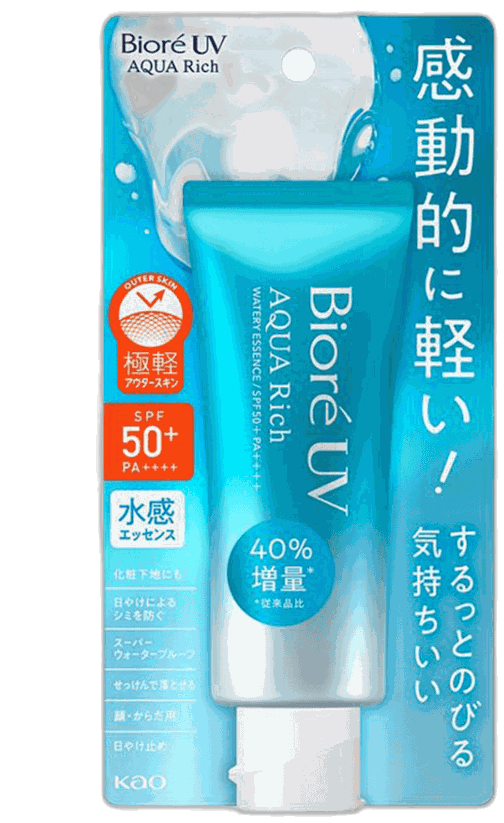
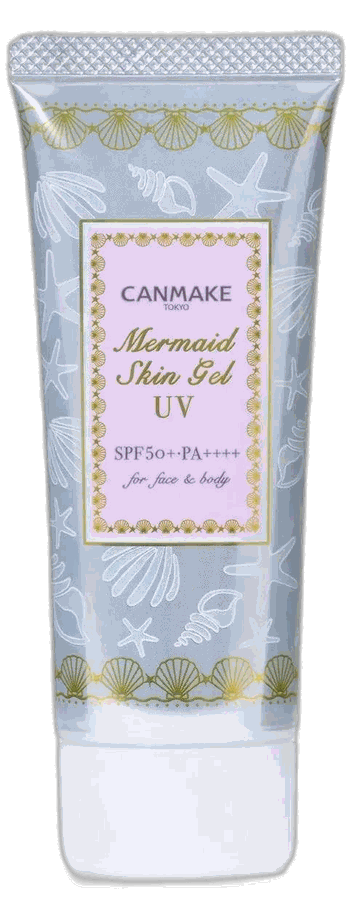
Japanese sunscreen textures: watery essences that feel like serum, smooth gels, fluid milks, primer hybrids with tone correcting effects. Products like Biore UV Aqua Rich Watery Essence and Canmake Mermaid Skin Gel UV genuinely feel like nothing on skin. No white cast, no greasy film, no pilling under makeup. For a full breakdown of what each format feels like and who it’s best for, see our Japanese sunscreen types guide.
American sunscreen textures: historically thick, white, greasy. The US market has improved significantly in recent years (brands like Supergoop and EltaMD have pushed texture innovation), but the average US sunscreen still can’t match the elegance of Japanese formulas, largely because of the filter limitations. If you’re coming from Sephora SPFs and want specific product swaps, see our guide to switching from Western to Japanese sunscreen.
The filter issue matters here too. Newer UV filters can achieve the same protection level at lower concentrations, which means less product on your face, which means a lighter feel.
Price
Japanese drugstore sunscreens cost roughly $8 to $15 even imported to the US. That’s comparable to or cheaper than many American sunscreens.
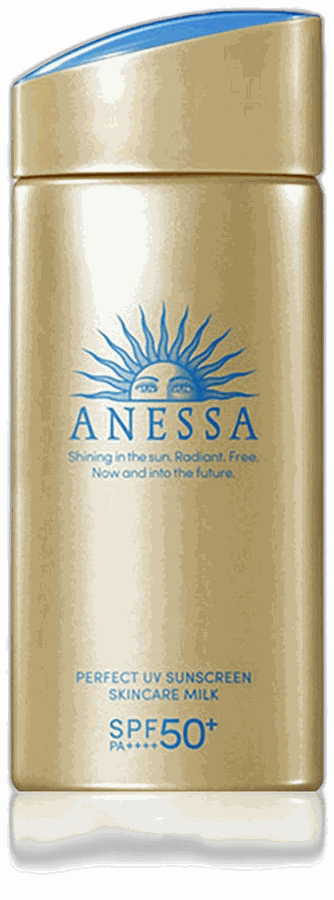
Premium Japanese sunscreens like Anessa Perfect UV Milk run $18 to $25, which is still less than premium US options like EltaMD or Supergoop.
Price is not a reason to choose American over Japanese sunscreen.
Availability
This is the one area where American sunscreens have a clear advantage. You can buy them at any drugstore, grocery store, or gas station. Japanese sunscreens require ordering from specialty retailers.
For daily use, having your sunscreen shipped from a J beauty retailer is perfectly manageable. But if you need sunscreen right now (forgot to pack it on a trip, ran out unexpectedly), the corner CVS stocks American sunscreens, not Japanese ones.
European Sunscreens: The Third Option
European sunscreens (La Roche Posay, Bioderma, Avène) deserve mention because they use the same advanced UV filters available in Japan. European sun care has similarly strong UVA protection.
The difference between European and Japanese sunscreens is mainly texture. European formulas tend to be heavier and more occlusive than Japanese ones. They protect well but don’t disappear into skin the way Japanese sunscreens do.
European sunscreens are easier to find outside Japan than Japanese ones (La Roche Posay is at most drugstores) but typically cost more.
FAQ
Are Japanese sunscreens safe to use in the US?
Yes. The UV filters used in Japanese sunscreens have decades of safety data from use across Japan, Europe, Australia, Korea, and other markets. The FDA hasn’t reviewed them for the US market, but that’s a regulatory backlog, not a safety concern. Millions of people use these products daily.
Will the FDA ever approve new UV filters?
Efforts have been ongoing for over a decade. The CARES Act (2020) and subsequent legislation attempted to create a faster pathway for new filter approval. Progress has been extremely slow. Most dermatologists and skincare professionals in the US acknowledge this as a regulatory failure, not a scientific disagreement.
Are American sunscreens bad?
No. American sunscreens provide meaningful UV protection. Products from EltaMD, Supergoop, La Roche Posay (US formulations), and CeraVe are solid options. The gap is in UVA specificity (PA rating vs Broad Spectrum), texture elegance, and the range of available UV filters. American sunscreens protect adequately; Japanese sunscreens protect more precisely in more elegant formulas.
Which Japanese sunscreen should I try first?
Biore UV Aqua Rich Watery Essence (Japanese version) is the default first recommendation. It’s affordable, universally flattering, and demonstrates exactly why Japanese sunscreens have the reputation they do. See the complete Japanese sunscreen guide for more options.