Japanese beauty explained
Biore UV Japan vs US: How to Buy the Right Aqua Rich Sunscreen (2026)
This causes more confusion than almost anything else in Japanese skincare. Someone sees Biore UV Aqua Rich recommended everywhere online, buys it at Target, and wonders what the fuss is about. Or they order the Japanese version after trying the US one and realize they’re nothing alike.
The Biore UV Aqua Rich sold in Japanese drugstores and the Biore sunscreen sold at US retailers are not the same product. Same parent company (Kao), same brand name, completely different formulas.
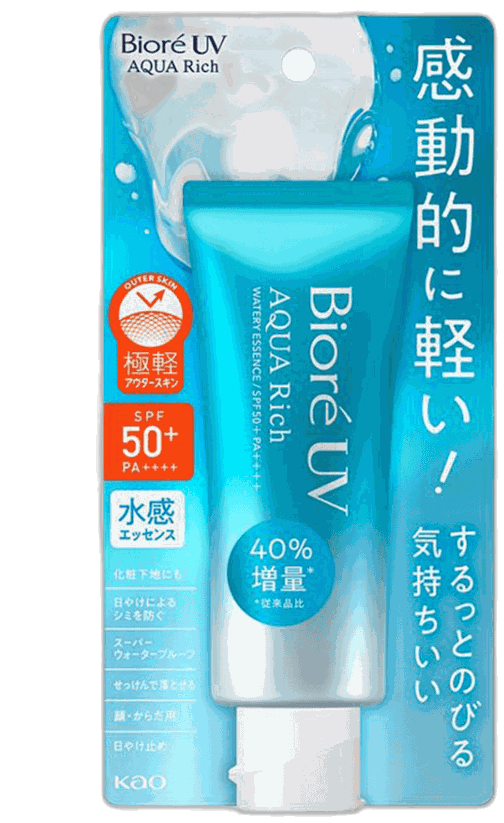
For the Japanese formula, see Bioré Watery Essence and its buying options. If you want to compare the formats first, use our Bioré guide.
Quick answer
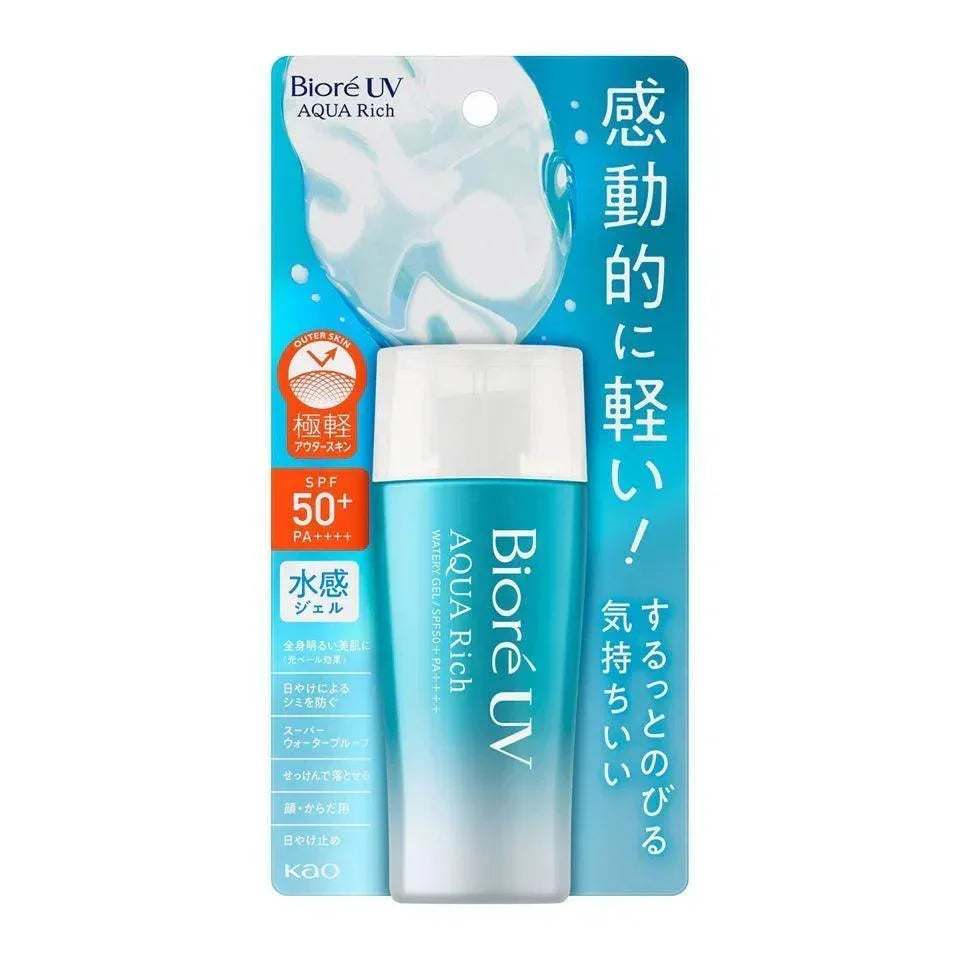
If you want the Biore UV Aqua Rich that is usually meant in Japanese-beauty discussions, buy the Japanese Watery Essence or Watery Gel and check the actual package for Japanese text and SPF50+ PA++++. If you want an English-labelled option from a mainstream US retailer, buy the US Biore product on its own merits—but do not assume it is an equivalent formula, texture, or UVA-labeling system. Marketplace listings can use recycled images, so the package shown and seller matter more than a title.
For related sunscreen-label context, see PA++++ vs Broad Spectrum, why Japanese sunscreens are relabeled in US stores, and the broader Japanese vs American sunscreen comparison.
What’s Different
| Japanese Version | US Version | |
|---|---|---|
| UV filters | Modern filters (Tinosorb S, Uvinul A Plus, etc.) | Older FDA approved filters (avobenzone, octinoxate, etc.) |
| UVA protection | PA++++ (highest rating) | “Broad Spectrum” (unspecified level) |
| Texture | Watery, serum like, nearly invisible | Thicker, more typical sunscreen feel |
| White cast | None | Minimal but more than JP version |
| Feel on skin | ”Like you’re not wearing sunscreen” | Standard lightweight sunscreen |
| Where to buy | J-beauty specialty retailers, imported | Target, CVS, us.biore.com |
| Buying risk | Marketplace listings may mix JP and US photos, so verify packaging | Easier retail returns, but not the cult Japanese formula |
Fast buying check: choose the Japanese Watery Essence for the imported Japanese formula, the Watery Gel when you want the gel format, or the US-labelled version when easy domestic purchase matters more. Before checkout, compare the listing’s package photo against the table above—not just its product name.
Why They’re Different
The US FDA has not approved new UV filters since the 1990s. Japanese and European regulators have approved multiple newer filters in the decades since.
This means Biore’s Japanese R&D team has access to UV filters that they literally cannot use in products sold in the US market. The Japanese formula uses these advanced filters to achieve better UVA protection in a lighter texture. The US formula has to work within FDA constraints, which limits what’s possible.
It’s not that the US version is bad. It’s that the Japanese version benefits from more advanced ingredients that aren’t available to US market products.
Which Version Is Online Hype About?
The Japanese version. When r/AsianBeauty recommends “Biore UV Aqua Rich Watery Essence,” when skincare TikTok shows the elegant watery texture, when people say “it feels like nothing on skin,” they’re all talking about the Japanese import.
The US version is a perfectly fine sunscreen. But it’s not the product that earned the cult following.
How to Tell Which You’re Buying
Japanese version:
- Packaging is primarily in Japanese
- Says PA++++ on the label
- Purchased from J beauty specialty retailers or imported from Japan
- Product page may say “Japanese version” or “imported”
US version:
- Packaging is in English
- Says “Broad Spectrum” instead of PA++++
- Available at Target, CVS, Walgreens, us.biore.com
- Made for the US market
On Amazon, both versions are sold, sometimes on the same product page. Check the seller information and product images carefully. If the listing shows English packaging, it’s the US version. If it shows Japanese packaging, it should be the Japanese import (though verify the seller is reputable).
The Full Japanese Biore UV Lineup
Biore Japan makes several UV products beyond the Watery Essence:
- UV Aqua Rich Watery Essence — the flagship, watery serum texture
- UV Aqua Rich Watery Gel — gel version, more product per tube, good for face and body
- UV Aqua Rich Tone Up Essence — color correcting version with a skin brightening effect
These products share the Aqua Rich name, but formulas and packaging can be reformulated. Treat the current package’s SPF/PA label and ingredient panel as the source of truth; the practical difference here is the texture and finish you prefer, not a promise that every version has an identical filter set.

Related: Best Japanese Sunscreen · Biore UV Aqua Rich Ingredients & Safety · Biore Japan Brand Guide · Canmake Mermaid Skin Gel vs Biore
FAQ
Is the US Biore sunscreen bad?
No. It’s a decent lightweight sunscreen that provides adequate protection. It’s just not the same product that everyone raves about online. If you’ve tried the US version and thought “this is fine but nothing special,” the Japanese version is a noticeably different experience.
Can you buy the Japanese version in US stores?
Not at mainstream retailers like Target or CVS. The Japanese version needs to be ordered from J beauty specialty retailers that import directly from Japan. Check the product page in our directory for current availability.
Is it legal to import Japanese sunscreen?
Yes. Individuals can import cosmetics for personal use. J beauty retailers import and sell Japanese sunscreens legally in the US. The products just can’t claim to be FDA approved since they contain UV filters the FDA hasn’t reviewed.
Will the US version ever get the Japanese formula?
Not unless the FDA approves new UV filters. There have been efforts to modernize FDA sunscreen regulations for over a decade, but progress has been extremely slow. For now, the only way to get the Japanese formula is to buy the Japanese product.
Are there other Japanese sunscreens with the same issue?
Most Japanese sunscreens sold in the US market use different formulas than their Japanese counterparts. However, Biore is by far the most common source of confusion because the US version is so widely available. Brands like Anessa, Skin Aqua, and Canmake don’t have separate US formula products, so when you buy them from a J beauty retailer, you’re getting the Japanese version.