Japanese beauty explained
Why Japanese Sunscreens Have No SPF Label at US Stores (And Why That's OK)
Quick Takeaway
- The stickers are a regulatory workaround, not a red flag. Japanese brands cover SPF claims on packaging sold in the US because the FDA classifies sunscreen as a drug and hasn’t approved most Japanese UV filters.
- The formula inside is the same. The UV filters are still in the product and listed in the ingredients. Only the marketing claims (SPF, PA, sun protection) are removed.
- UV filter ingredients are legal in cosmetics. What’s restricted is claiming sun protection, because that makes a product an OTC drug under FDA rules.
- More physical US stores carry Japanese beauty now. Miniso, Teso Life, Shibuyala, and others stock Japanese sunscreens, but all must comply with FDA labeling rules.
- You can verify the formula yourself. Check the ingredient list for UV filters like octinoxate (methoxycinnamate), bemotrizinol, or tinosorb. If they’re there, the product provides UV protection regardless of what the label says.
If you’ve spotted a Japanese sunscreen at a US store with a sticker covering the SPF rating, you’re not imagining things. This has become increasingly common as Japanese beauty brands expand their physical retail presence outside Japan, and it’s causing a lot of confusion.
Here’s what’s going on.
Why the Stickers Exist: FDA vs Japan’s PMDA
The core issue is a regulatory mismatch between two countries.
In Japan, sunscreen is regulated as a “quasi drug” (医薬部外品) by the PMDA (Pharmaceuticals and Medical Devices Agency). Japan has approved a wider range of UV filter ingredients for use in sun protection products, including newer filters like bemotrizinol (Tinosorb S) and bisoctrizole (Tinosorb M) that provide excellent broad spectrum UV protection.
In the US, sunscreen is classified as an over the counter (OTC) drug by the FDA. The FDA’s monograph covers about 16 UV filter ingredients, though two (PABA and trolamine salicylate) were deemed non-GRASE in 2021, leaving roughly 14 currently allowed. Most date to the 1990s or earlier. Newer filters that are standard everywhere else, like bemotrizinol (Tinosorb S), bisoctrizole (Tinosorb M), and uvinul A plus, haven’t been approved because the FDA’s review process has been stalled for decades.
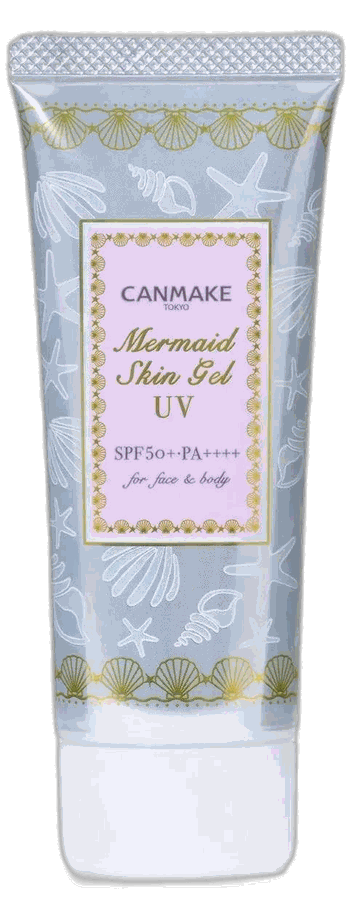
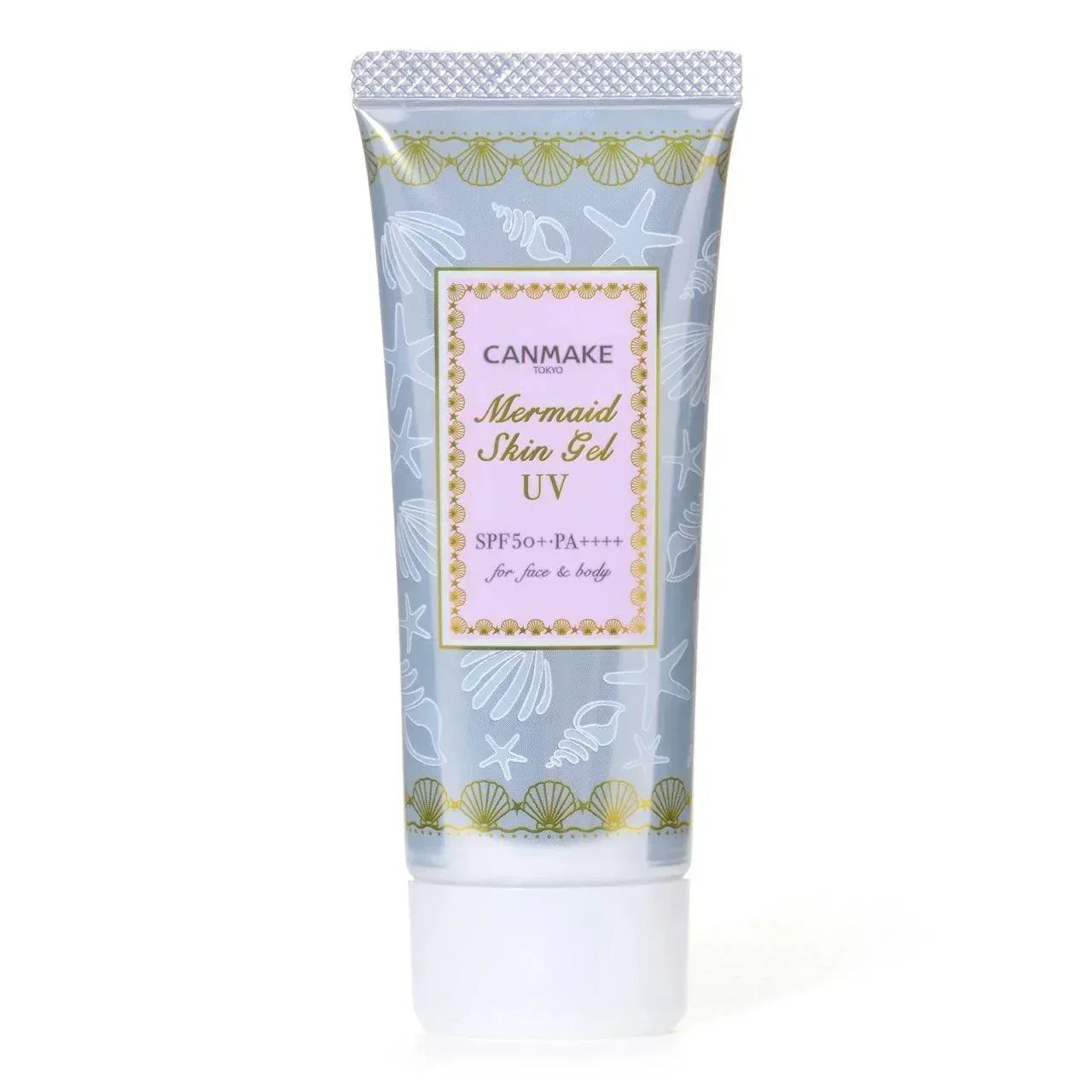
This creates a problem for Japanese brands selling in the US. A product like Canmake Mermaid Skin Gel UV contains UV filters that are perfectly legal to put in a cosmetic product. But the moment you label it as a sunscreen, or make any SPF claim, it becomes a drug in the FDA’s eyes, and that drug contains “unapproved active ingredients.”
So brands have two options:
- Reformulate for the US market using only FDA approved filters (this is what Biore did with their US version)
- Remove the sun protection claims and sell the same formula as a cosmetic (primer, skin gel, moisturizer)
Option 2 is what you’re seeing at stores like Miniso. The sticker over the SPF rating isn’t hiding a problem. It’s compliance.
The Formula Is Identical
This is the part that confuses people most. If you peel back the sticker (or check the ingredient list on the tube), the UV filters are still there. Bemotrizinol, octinoxate, diethylamino hydroxybenzoyl hexyl benzoate: all present, all functional.
The ingredients themselves are not illegal in the US. They’re used in hundreds of cosmetic products (foundations, moisturizers, primers) without issue. What’s restricted is claiming that these ingredients provide sun protection, because that specific claim triggers OTC drug classification.
Canmake USA’s website demonstrates this clearly. Their Mermaid Skin Gel is listed under “Make Base” (primer), not sunscreen. The product name drops the “UV” suffix. No SPF value appears anywhere on the US page. But the ingredient list is the same Japanese formula, UV filters and all.
To be direct: the product protects against UV radiation exactly the same way it did before the sticker went on. The sticker changes the legal classification, not the chemistry.
Canmake
8 retailersSee retailers →
Which US Stores Carry Japanese Beauty Products
Japanese beauty’s physical retail footprint outside Japan has grown significantly. Here are the main places you’ll find Japanese skincare and sunscreen on shelves:
Miniso is probably where most people first encounter this. The Chinese founded lifestyle retailer has dozens of US locations and stocks select Japanese beauty brands, including Canmake. Products with SPF claims will have the claims covered or removed for US retail compliance.
Teso Life is a Japanese variety store with locations primarily in the New York area. It carries a much wider range of Japanese drugstore beauty products and tends to stock the original Japanese packaging.
Shibuyala operates Japanese beauty retail locations in Los Angeles and New York, specializing in authentic Japanese cosmetics and skincare.
Ume Cosme in New York focuses specifically on Japanese cosmetics, carrying brands from drugstore to mid range.
Target, Ulta, and Sephora carry limited Japanese beauty selections, but these are typically US formulations or brands that have gone through full FDA compliance (like Tatcha or the US version of Biore).
At any of these retailers, the same rules apply: if a product makes SPF claims, it must use FDA approved filters. If it uses Japanese filters, those claims get removed.
How to Verify What You’re Getting
If you want to confirm that a Japanese beauty product at a US store is the original Japanese formula (and not a reformulated version), check these things:
Look at the ingredient list. Japanese formula sunscreens will list UV filters like:
- Ethylhexyl methoxycinnamate (octinoxate, approved by both FDA and PMDA)
- Diethylamino hydroxybenzoyl hexyl benzoate (uvinul A plus, PMDA only)
- Bis ethylhexyloxyphenol methoxyphenyl triazine (bemotrizinol/Tinosorb S, PMDA only)
If you see filters that aren’t among the FDA’s 16 approved ingredients, you’re holding the Japanese formula.
Check the packaging language. All Japanese text with no English Drug Facts panel? That’s the original Japanese packaging, possibly with a sticker over SPF claims. A US reformulation would have a standard Drug Facts label listing approved active ingredients.
Compare with the Japanese version. Our Biore JP vs US formula comparison breaks down exactly how reformulations differ. The pattern is similar across brands: US versions swap out newer UV filters for older FDA approved ones, often changing the texture and finish in the process.
Is It Safe?
Yes. We covered this in depth in our guide on whether Japanese sunscreens are safe, but the summary: the UV filters in Japanese sunscreens have been used safely across Japan, Europe, Australia, and Canada for over 20 years. The FDA hasn’t rejected them. It simply hasn’t finished reviewing them.
The products you’ll find at Miniso, Teso Life, or similar US stores contain the same formulation sold in Japan, where millions of people use them daily. The sticker changes the label, not the formula.
FAQ
Are the UV filter ingredients in Japanese sunscreens legal in the US?
Yes. The ingredients themselves are legal to include in cosmetic products. What’s restricted is making sun protection claims (SPF, broad spectrum, sunscreen) with ingredients the FDA hasn’t approved as OTC drug actives. That’s why brands remove those claims for US retail.
If the SPF label is covered, how do I know it protects against UV?
Check the ingredient list for UV filters. If the formula contains the same active filters as the Japanese version (which you can cross reference with the original product listing), it provides the same UV protection. The chemistry doesn’t change because of a sticker.
Why don’t Japanese brands just get FDA approval for their UV filters?
They’ve tried. Multiple companies have submitted data to the FDA. The review process has been slow for decades. The Sunscreen Innovation Act of 2014 and the CARES Act of 2020 both attempted to create faster approval pathways, but progress remains limited. Meanwhile, these filters remain approved and widely used in the EU, Australia, Japan, South Korea, and Canada.
Should I buy the US reformulation or the Japanese original?
That depends on your priorities. The Japanese formula typically has a different texture profile, uses newer UV filters, and carries PA ratings for UVA protection. The US reformulation has the advantage of a clear SPF label and full FDA compliance. For a detailed breakdown, see our Biore JP vs US formula comparison.
Can I still buy Japanese formula sunscreens online?
Yes. Online retailers that ship from Japan or stock Japanese formulations are not subject to the same retail labeling rules as physical US stores. Check our where to buy guide for vetted retailers carrying authentic Japanese formulations.