Japanese beauty explained
Best Japanese Sunscreens for Sensitive Skin: Gentle, High Protection Picks
Finding a sunscreen that works without making your skin red, itchy, or breaking you out is one of the most frustrating parts of having sensitive skin. Japanese sunscreens are a strong place to look because the Japanese market has both advanced mineral formulations and newer generation chemical filters that tend to be gentler than the older UV filters common in Western products. Japan’s quasi drug regulatory system also means that products marketed for sensitive skin go through standardized testing, not just marketing fluff.
This guide covers the best Japanese sunscreens specifically formulated for reactive, easily irritated skin, organized by texture so you can find the right fit. If you want to see the full range of options including those for normal skin, check our best Japanese sunscreen roundup.
Why Sensitive Skin Needs a Different Sunscreen
Most sunscreen complaints from people with sensitive skin come down to a few specific triggers:
Alcohol (ethanol). Many Japanese sunscreens use alcohol for that lightweight, fast drying finish. It works beautifully on normal and oily skin, but on sensitive or compromised skin, it can cause stinging, dryness, and barrier disruption over time. If your skin reacts to sunscreen, this is the first ingredient to check.
Fragrance. Even “gentle” fragrances can be irritating. Fragrance sensitivity is cumulative, meaning you might tolerate it for weeks before a reaction shows up. For reactive skin, fragrance free is the safer default.
Older chemical UV filters. Filters like oxybenzone and octinoxate (still common in some Western sunscreens) are known irritants for many people. Japanese formulations often use newer filters like Tinosorb S (bemotrizinol) and Uvinul A Plus (diethylamino hydroxybenzoyl hexyl benzoate), which are photostable and less likely to cause reactions. Japan was early to adopt these next generation filters, which is one reason its sunscreens work well for sensitive skin even when they aren’t purely mineral.
Mineral filters aren’t automatically gentle either. Zinc oxide and titanium dioxide are generally well tolerated, but the base formula still matters. A mineral sunscreen loaded with essential oils or harsh preservatives can still irritate. The formulation around the filters is just as important as the filters themselves.
Mineral vs. Chemical: Which Is Better for Sensitive Skin?
The short answer: it depends on what specifically triggers your skin.
Mineral (physical) sunscreens sit on top of the skin and reflect UV rays. They contain zinc oxide, titanium dioxide, or both. They’re a solid default for very reactive skin because the filters themselves rarely cause irritation. The tradeoff is texture. Mineral sunscreens can feel thick, leave a white cast, and be harder to blend. Japanese formulations handle this better than most by using finer particle sizes and silicone bases that help them spread smoothly.
Chemical (organic) sunscreens absorb UV rays and convert them to heat. They tend to have more elegant textures, but some filters can sting or cause flushing on sensitive skin. The key distinction is which chemical filters. Japan’s newer generation options (like those mentioned above) are significantly gentler than older ones. A well formulated hybrid with modern filters can be just as comfortable as a mineral sunscreen for many people with sensitive skin.
Hybrid sunscreens use both mineral and chemical filters. This is a sweet spot for sensitive skin. You get the broad protection of mineral filters with the cosmetic elegance of chemical ones, often using less of each individual filter, which can reduce irritation risk.
If your skin reacts to everything, start with a pure mineral formula. If you’ve tolerated chemical sunscreens before but want something gentler, the hybrids and newer chemical options below are worth trying.
Our Picks: Gentle Japanese Sunscreens by Texture
Milks
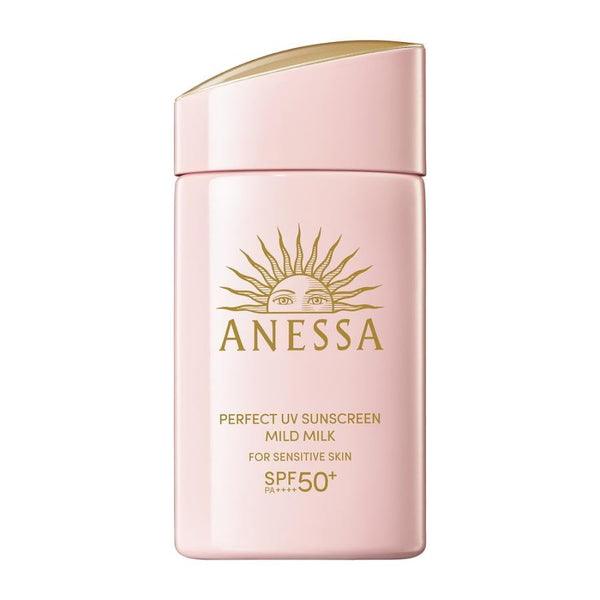
Anessa Perfect UV Sunscreen Mild Milk SPF50+ PA++++
The gold standard for sensitive skin sun protection in Japan. This is the version of Anessa designed specifically for reactive skin: no fragrance, no alcohol, no colorants, and no parabens. Despite the gentle formula, it still delivers SPF50+ PA++++ protection with Anessa’s signature water and sweat resistance. The texture is a lightweight milk that blends to a natural satin finish. Some users note a slight white cast, especially on deeper skin tones, which is the tradeoff for the mineral and hybrid filter combination. Community consensus on r/AsianBeauty is that this is one of the most protective sensitive skin sunscreens you can buy. For more on the full Anessa range, see our Anessa guide and how the Mild compares to the regular milk and gel.
Anessa (Shiseido)
4 retailersSee retailers →
Minon UV Mild Milk SPF50+ PA++++
Minon is a Japanese pharmacy brand by Daiichi Sankyo (a pharmaceutical company) focused entirely on sensitive and dry skin. Their UV Mild Milk uses mineral filters in a moisturizing milk base with amino acid moisturizers, the same approach as the rest of the Minon Amino Moist line. It’s fragrance free and alcohol free. The finish is more dewy than the Anessa Mild, which makes it a better match for dry or dehydrated sensitive skin. Not as sweat resistant as the Anessa, so better suited for daily wear than outdoor sports.
Minon
1 retailerSee retailers →
Curel Intensive Moisture Care Skin Repair UV Serum
Curel’s sensitive skin sunscreen uses a mineral filter base (titanium dioxide) combined with the brand’s signature pseudo ceramide complex for barrier repair. It’s designed as both sun protection and skin treatment for compromised barriers. Alcohol free, fragrance free. The texture is closer to a lightweight serum than a traditional milk, and it absorbs well without the heavy feeling many mineral sunscreens have. If you’re dealing with both sun sensitivity and barrier damage (from retinol use, over exfoliation, or conditions like eczema), this is a strong choice. See our full Curel guide for more on the brand’s approach to sensitive skin.
Curel
1 retailerSee retailers →
Curel also makes a UV Protection Milk SPF50+ PA+++ that uses purely mineral filters and has a slightly thicker texture. It’s popular in Japan but can be harder to find through retailers.
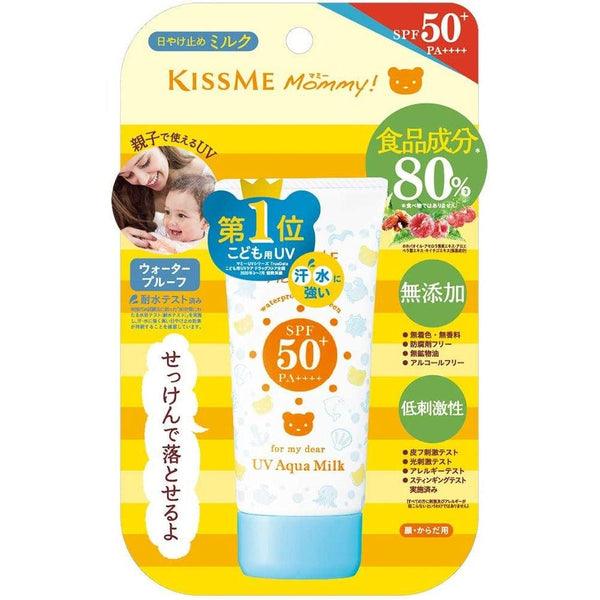
KissMe Mommy UV Aqua Milk SPF 50+ PA++++
This one is technically designed for babies and children, which means the formula is as gentle as it gets. Mineral filters only, no fragrance, no alcohol, no colorants. The texture is runny and lightweight for a mineral milk. It’s easy to apply on both face and body. The protection level is solid at SPF50+ PA++++. The bottle is small (50ml), so it’s best as a face sunscreen. If you’ve tried everything else and your skin still reacts, this is a good reset option.
KissMe
0 retailersSee retailers →
Gels and Essences
d-program Allerbarrier Essence N SPF50+ PA+++
d program is Shiseido’s line specifically developed for people with unstable, reactive skin. The Allerbarrier Essence uses what Shiseido calls “Allerbarrier Technology,” a protective veil designed to block not just UV but also airborne irritants like pollen, dust, and PM2.5. It uses a hybrid filter system (both mineral and chemical) in an essence texture that applies smoothly. Alcohol free, fragrance free, paraben free. The PA rating is PA+++ rather than PA++++, which is still strong UVA protection. Popular in Japan during spring allergy season when sensitive skin tends to flare. If environmental irritants are part of your sensitivity picture, this is worth considering.
d-program
1 retailerSee retailers →
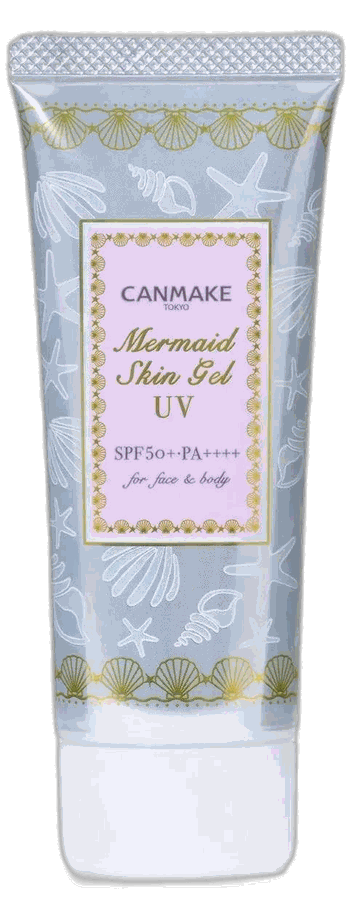
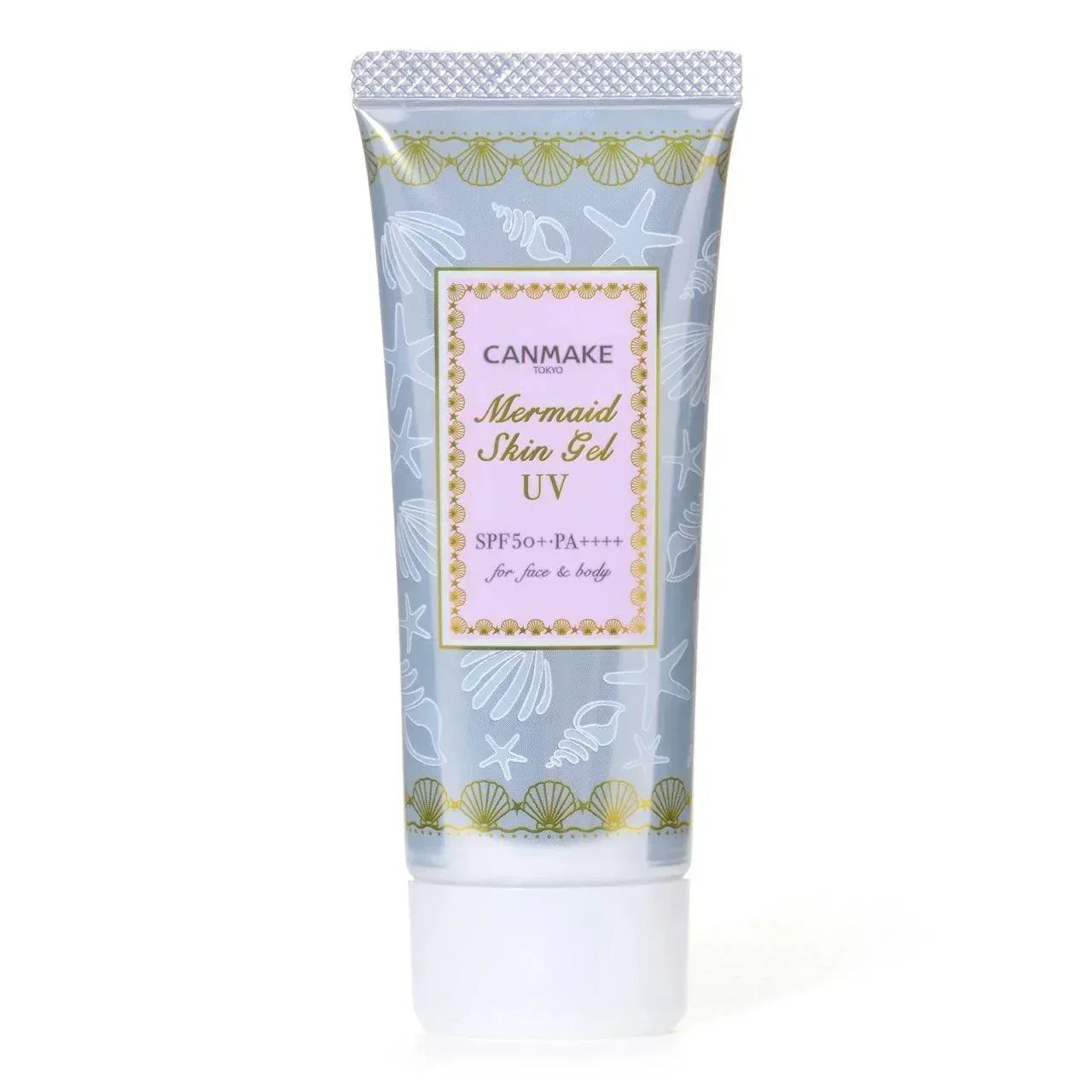
Canmake Mermaid Skin Gel UV SPF50+/PA++++
Canmake is a budget makeup brand, but this sunscreen has developed a cult following for good reason. It’s alcohol free, uses a hybrid filter system, and has a watery gel texture that disappears into the skin and works well as a makeup base. Multiple r/AsianBeauty users with sensitive skin describe it as their “ride or die” daily sunscreen. The finish is dewy and slightly luminous. One thing to note: some users report mild eye stinging when the product migrates with sweat. If that’s an issue for you, the milks above may be a better choice. At around $10 for 40g, it’s also one of the most affordable options on this list.
Canmake
8 retailersSee retailers →
Verdio UV Tone Up Gel SPF50+/PA++++
Made by OMI Brotherhood, the Verdio line is formulated to be free of fragrance, alcohol, mineral oil, and colorants. The standout ingredient across the range is centella asiatica (cica), included for its calming properties. This Tone Up variant adds a lavender tone correction effect while keeping the gentle, moisturizing gel texture. It works well on normal to dry sensitive skin. Some users find it leaves a shiny finish, which can be a plus for dry skin but not ideal if you’re oily. It comes in a large pump bottle, making it one of the best value options for body application.
A Note on NOV
NOV is a Japanese brand developed by Noevir Group in partnership with dermatologists, specifically for people with acne prone and sensitive skin. Their UV Milk and UV Shield lines are well regarded on r/AsianBeauty for being extremely gentle with minimal ingredients. NOV products are widely available in Japanese pharmacies and through some international retailers. They’re worth seeking out if the options above don’t work for your particular sensitivities.
What to Look for on the Label
When shopping for a Japanese sunscreen for sensitive skin, these label cues help narrow things down:
敏感肌用 (binkan hada you) means “for sensitive skin.” This is the most direct indicator that the product was formulated and tested with reactive skin in mind.
低刺激性 (tei shigeki sei) means “low irritation.” Products with this label have been tested for irritation potential.
アルコールフリー (arukōru furī) means “alcohol free.” Watch for this specifically because many Japanese sunscreens that are otherwise gentle still contain alcohol for texture.
無香料 (mu kōryō) means “fragrance free” and 無着色 (mu chakushoku) means “no colorants.” These appear on most sensitive skin formulas.
紫外線吸収剤フリー (shigaisen kyūshūzai furī) means “chemical UV filter free,” in other words, mineral only. Look for this if you specifically want to avoid chemical filters entirely.
For a deeper look at how Japanese sun protection ratings compare to what you’re used to, see PA+++ vs. Broad Spectrum: What’s the Difference? and What Does PA++++ Actually Mean?.
How to Patch Test a New Sunscreen
Patch testing is especially important for sensitive skin because reactions don’t always show up immediately.
Step 1: Apply a small amount behind your ear or on the inside of your forearm. Wait 24 hours. If you see redness, bumps, or feel itching, stop.
Step 2: If the first test is clear, apply a small amount to one side of your jawline (closer to actual face skin conditions). Wait another 24 hours.
Step 3: If both tests pass, use the sunscreen on your full face for three consecutive days. Some reactions (especially to chemical filters) take a few days of cumulative exposure to appear.
Keep everything else constant. Don’t introduce new serums, actives, or moisturizers during the patch test period. If you react, you want to know it’s the sunscreen.
Time it right. Don’t start testing a new sunscreen right after a retinol night or an acid treatment. Your barrier is already compromised, and you’ll get a false positive.
FAQ
Is mineral sunscreen always better for sensitive skin?
Not necessarily. Mineral filters (zinc oxide and titanium dioxide) are less likely to cause chemical irritation, but the rest of the formula matters just as much. A mineral sunscreen with irritating preservatives or essential oils can still cause reactions. Some of the newer chemical filters used in Japanese sunscreens, like Tinosorb S, are very well tolerated by sensitive skin. The best approach is to look at the full ingredient list, not just whether it says “mineral” on the label.
Can I use Japanese sunscreen if I have eczema or rosacea?
Many people with eczema and rosacea use Japanese sunscreens successfully, especially the mineral and hybrid options listed above. Curel’s UV line and d program’s Allerbarrier range are specifically designed for compromised skin barriers. That said, everyone’s triggers are different. Patch test first, and if you’re actively flaring, stick with your dermatologist’s recommendation until things calm down.
Why do so many Japanese sunscreens contain alcohol if it’s bad for sensitive skin?
Alcohol helps sunscreens dry quickly, feel lightweight, and absorb without residue. For the majority of people, it’s not a problem. Japanese consumers generally prioritize texture and wearability, so alcohol is a common formulation choice. Brands that specifically target sensitive skin (Curel, Minon, d program, NOV) typically formulate without it. When shopping, check for アルコールフリー on the label.
How often should I reapply sensitive skin sunscreen?
Every two hours of direct sun exposure, same as any sunscreen. If you’re indoors most of the day with minimal UV exposure, one morning application is generally sufficient for daily protection. If you’re outdoors, sweating, or swimming, reapply every two hours regardless of SPF level. For information on how Japanese sunscreen standards compare to US ones, see Are Japanese Sunscreens Safe? What the FDA Says.
What SPF should I use for sensitive skin?
SPF30 provides about 97% UVB protection and SPF50 provides about 98%. The difference is small, but for sensitive skin, a higher SPF can be worth it because it gives you a larger margin of error if you don’t apply enough (most people underapply). All of the products in this guide are SPF50 or SPF50+. The more important factor for daily UVA protection is the PA rating. Look for PA++++ for the highest level of UVA defense.