Hada Labo vs CeraVe: Japanese Hydration vs American Ceramides
Choose Hada Labo when you want an extra hydrating lotion before moisturizer. Choose CeraVe Moisturizing Cream when you need the moisturizer itself. You can use the Japanese lotion and American cream together, so start with the step your routine is missing.
As an Amazon Associate we earn from qualifying purchases.
The cream to follow your lotion
CeraVe Moisturizing Cream
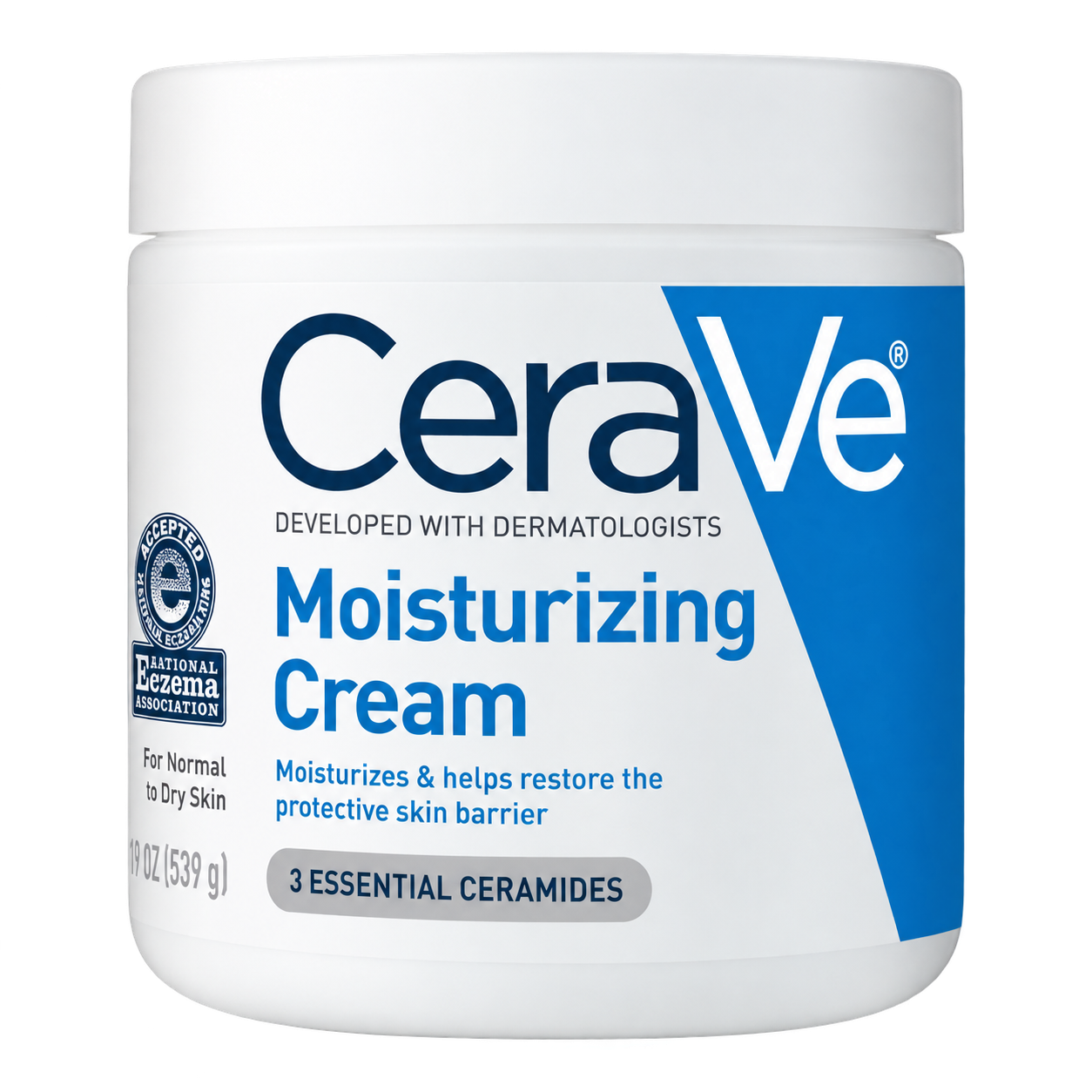
Hada Labo supplies the hydrating layer; CeraVe Moisturizing Cream can be the final step. This American moisturizer has a rich texture and no added fragrance. Choose it when you need a cream, rather than another watery product.
You can use it alone if your routine doesn’t need a toner.
Shop on Amazon USThe Core Difference
Hada Labo is built around hyaluronic acid. Its whole approach is layered hydration: pulling water into the skin and keeping it there. The star products are watery lotions (toners) that you pat onto clean skin in layers.
CeraVe is built around ceramides. Its approach is barrier repair: reinforcing the skin’s natural protective layer with lipids. The star products are creams and cleansers that restore and protect.
These aren’t competing strategies. Hyaluronic acid adds moisture. Ceramides keep moisture from leaving. They actually work well together.
Product Comparison
Hydrating Toner/Lotion
Hada Labo Gokujyun Lotion Moist is a watery hydrating toner with 3 types of hyaluronic acid. You pat it on after cleansing and it delivers immediate, noticeable hydration. Use it as a toner step rather than a face cream. (For more Western to Japanese product swaps beyond these two brands, see our Japanese skincare swaps guide.)
CeraVe also sells a Hydrating Toner, but the Moisturizing Cream discussed below serves a different step. Compare lotions with lotions and creams with creams.
Moisturizer
CeraVe Moisturizing Cream is the rich cream to choose when you want a final layer after a hydrating lotion. It contains ceramides, hyaluronic acid and petrolatum, and has no added fragrance.
Hada Labo offers the Gokujyun Premium Milky Lotion (a lightweight emulsion) and the Gokujyun Perfect Gel (an all in one gel moisturizer). Both are lighter than CeraVe’s cream.
Winner: Depends on skin type. CeraVe for dry skin that needs a rich cream. Hada Labo for oily or combo skin that wants lightweight hydration without heaviness.
Cleanser
CeraVe Hydrating Facial Cleanser is a standard gentle cleanser. Does the job, doesn’t strip skin.
Hada Labo Gokujyun Cleansing Foam is a pump type foaming cleanser with hyaluronic acid. Also gentle, also doesn’t strip.
Winner: Tie. Both are solid gentle cleansers. CeraVe is easier to find in the US.
Compared to Other Japanese Alternatives
If you’re interested in the ceramide approach but want to explore Japanese options:
Curél is another ceramide care option to consider. The Curel Intensive Moisture Facial Cream is designed specifically for sensitive, barrier compromised skin. It has no added fragrance.
Naturie is closer to Hada Labo in philosophy. The Hatomugi Skin Conditioning Gel offers lightweight, affordable hydration.
Torriden (Korean) is another common comparison. Their Dive In serum uses hyaluronic acid similarly to Hada Labo but in a serum format. COSRX is also frequently compared for affordable, simple formulas.
Can You Use Both?
Yes, if you enjoy a hydrating layer under your cream:
- Cleanse (either brand)
- Hada Labo Gokujyun Lotion patted onto damp skin (hydration)
- CeraVe Moisturizing Cream on top (barrier sealing)
This gives you hyaluronic acid hydration locked in by ceramides. You can skip the lotion if moisturizer alone feels comfortable.
Related: Hada Labo Complete Guide · Hada Labo Premium vs Moist vs Light · Curel vs CeraVe
FAQ
Is Hada Labo better than CeraVe?
They do different things. Hada Labo excels at hydration (adding water to skin). CeraVe excels at barrier repair (keeping water in skin). For dehydrated skin, Hada Labo’s lotions may make a more noticeable immediate difference. For sensitive, barrier damaged skin, CeraVe’s ceramide approach may be more helpful. Using both together is a popular and effective strategy.
Which is cheaper?
CeraVe is more affordable per ml because it’s widely available at US drugstores without import costs. Hada Labo is still very affordable (under $15 for most products) but requires ordering from specialty retailers, which may add shipping costs.
Which is better for acne prone skin?
Choose the individual formula rather than the brand. CeraVe describes its Moisturizing Cream as non comedogenic, but that doesn’t predict how every person’s skin will respond. A hydrating lotion also serves a different step from an acne treatment.
Is Curel the Japanese CeraVe?
In concept, yes. Both are ceramide focused brands for sensitive skin. Curel uses a proprietary ceramide technology and is backed by Kao’s pharmaceutical research. The formulations are different but the philosophy is similar. If you like CeraVe’s approach but want to try a Japanese equivalent, Curel is where to look. Our Japanese skincare for sensitive skin guide covers the full routine approach.
Sources
CeraVe Moisturizing Cream and Rohto’s Gokujyun range. Product selection checked October 9, 2026.