Japanese beauty explained
Skin Aqua vs Biore Sunscreen: Which Should You Buy?
Skin Aqua (by Rohto) and Biore UV (by Kao) are the two most recommended affordable Japanese sunscreens worldwide. Both are SPF50+ PA++++, both feel nothing like the thick, chalky sunscreens you might be used to, and both cost under $15.
But each brand has multiple sunscreens, and the differences between them go beyond just “one is tinted, one isn’t.” This guide breaks down every current variant, compares them side by side, and tells you which one to pick based on what your skin needs.
The Short Version
If you want a recommendation and don’t need the full breakdown:
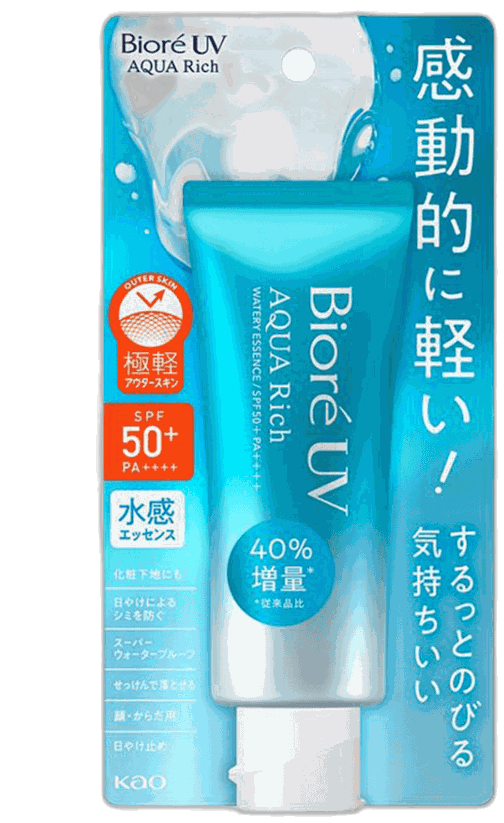
- Invisible everyday sunscreen that works under makeup: Biore UV Aqua Rich Watery Essence SPF50+/PA++++ (Japanese Version)
- Sunscreen that doubles as a brightening primer: Skin Aqua Tone Up UV Essence Lavender (2026)
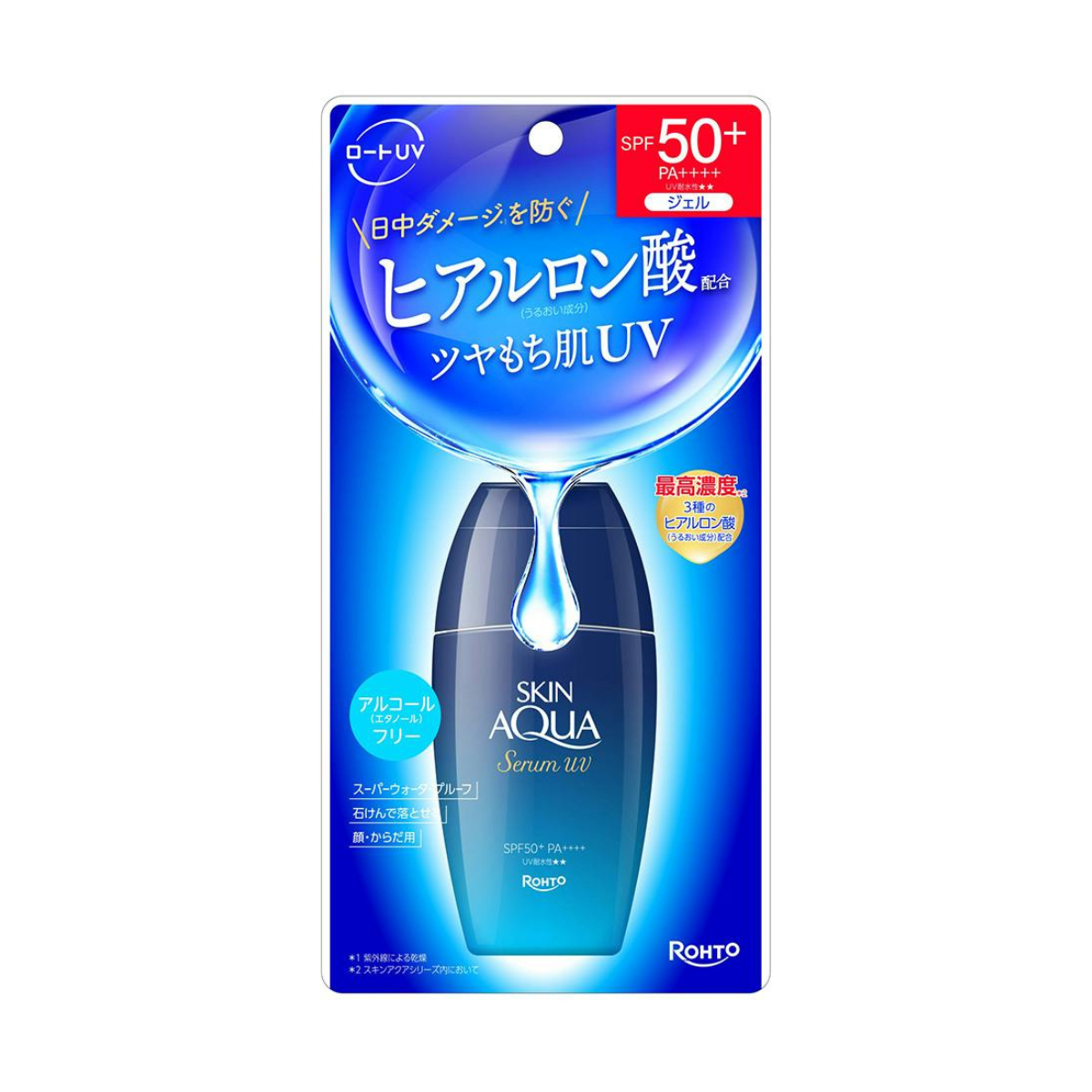
- Hydrating, alcohol-free, fragrance-free: Skin Aqua Serum UV (2026 Formula)
- Oily skin in humid weather: Biore Watery Essence (2025) or Skin Aqua Serum UV
- Deep skin tones (no tint risk): Biore Watery Essence or Skin Aqua Serum UV
- Outdoor sports / heavy sweat: Neither. Get Anessa Perfect UV Sunscreen Skincare Milk SPF50+/PA++++
The Two Brands at a Glance
Biore UV is made by Kao Corporation, one of Japan’s largest consumer goods companies. The Aqua Rich line launched in 2014 and became the internet’s default Japanese sunscreen recommendation. Lightweight, invisible, no white cast, works under everything. Kao reformulates roughly every two years, and the 2025 version is the current one.
Skin Aqua is made by Rohto Pharmaceutical, the company behind Hada Labo and Mentholatum. Skin Aqua’s angle has always been variety: they offer tinted versions (Tone Up line), hydrating versions (Serum UV), and budget versions. The Tone Up Lavender is a cult favorite for its color correcting effect.
Both companies manufacture in Japan and use modern UV filter technology.
Side by Side: The Core Comparison
This compares the most popular product from each brand, since these are what most people mean when they say “Skin Aqua vs Biore.”
| Biore UV Aqua Rich Watery Essence (2025) | Skin Aqua Tone Up UV Essence Lavender (2026) | |
|---|---|---|
| SPF/PA | SPF50+ PA++++ | SPF50+ PA++++ |
| Size | 70g (also 120g Fresh Pouch) | 80g |
| Price (Japan) | ¥968 (70g) / ¥1,317 (120g) | ~¥740 |
| Price per gram | ~¥13.8/g (70g) / ~¥11/g (120g) | ~¥9.3/g |
| UV Filters | Octinoxate, Uvinul T 150, Uvinul A Plus, Tinosorb S | Octinoxate, Uvinul A Plus, Tinosorb S, Tinosorb M, Titanium Dioxide |
| Texture | Watery essence, serum-like | Lightweight essence with lavender tint |
| Tint | None | Lavender (brightening, color correcting) |
| White cast | None | Intentional lavender cast (brightening on light/medium skin, potentially ashy on deep skin) |
| Finish | Slightly dewy, invisible | Soft matte, luminous |
| Alcohol | Yes | Yes (2026 version) |
| Fragrance | Yes (gentle white muguet) | Yes (soap scent) |
| Water resistance | 80 minutes | Water and sweat resistant |
| Makeup base | Yes | Yes (can replace a primer) |
| Removal | Face wash or body soap | Face wash or soap |
| Made by | Kao Corporation | Rohto Pharmaceutical |
The key difference is really about what you want your sunscreen to do beyond UV protection. Biore disappears completely. Skin Aqua Tone Up adds a visible brightening, primer-like base layer that can replace a step in your routine.
Texture and Feel
Biore Watery Essence goes on like a lightweight serum. It’s watery, spreads easily, and dries down to something close to a bare skin feel. The 2025 reformulation is slightly less emollient than the 2023 version. It added silica and removed some of the silicones that made the older version feel greasy by midday. If you have oily skin, you’ll notice the improvement. It still leans slightly dewy rather than fully matte, but it’s not the kind of dewiness that turns into oil.
Skin Aqua Tone Up Lavender has a similar lightweight texture but with visible color pigments mixed in. It applies with a subtle lavender tint that acts like a color correcting primer. On fair to medium skin, this translates to a “my skin but cleaner” effect that neutralizes yellowness and redness. It sets slightly more matte than Biore, with a soft luminous quality from the strobe pearl particles in the formula.
Both spread evenly with the recommended amount (roughly a nickel-sized dollop for the face). Neither pills or clumps, and both reapply well over themselves.
White Cast and Skin Tone
This is the single biggest factor for many people.
Biore Watery Essence has zero tint and zero white cast. It works on every skin tone without any ashiness. This is one of the main reasons it’s the default recommendation: it’s universally safe.
Skin Aqua Tone Up Lavender intentionally deposits a lavender tint using Blue 1 and Red 227 pigments plus titanium dioxide. On light to medium skin, this reads as “brightening.” On deeper skin tones, the lavender can look purple or ashy. It’s not a white cast from titanium dioxide in the way mineral sunscreens cause it; it’s a deliberate color effect that only flatters certain skin tones.
If your skin is darker than about NC35/medium, stick with the untinted options: Biore Watery Essence, Skin Aqua Serum UV (2026 Formula), or Skin Aqua Super Moisture Essence SPF50+/PA++++.
UV Filters and Protection
Both sunscreens are SPF50+ PA++++, the highest rating available in Japan. Here’s what’s under the hood:
Biore Watery Essence 2025 uses four UV filters:
- Octinoxate (UVB)
- Uvinul T 150 / Ethylhexyl Triazone (UVB)
- Uvinul A Plus / Diethylamino Hydroxybenzoyl Hexyl Benzoate (UVA)
- Tinosorb S / Bis-Ethylhexyloxyphenol Methoxyphenyl Triazine (broad spectrum UVA/UVB)
Skin Aqua Tone Up Lavender 2026 uses five UV filters:
- Octinoxate (UVB)
- Uvinul A Plus (UVA)
- Tinosorb S (broad spectrum)
- Tinosorb M / Methylene Bis-Benzotriazolyl Tetramethylbutylphenol (broad spectrum, physical/organic hybrid)
- Titanium Dioxide (physical UVB/UVA2)
The Skin Aqua Tone Up Lavender has a broader filter combination on paper, with both Tinosorb S and Tinosorb M plus a physical filter. In practice, both sunscreens provide strong everyday UV protection. Neither is formulated for extreme outdoor conditions, which is where products like Anessa Perfect UV Sunscreen Skincare Milk SPF50+/PA++++ are designed to excel.
Every Biore UV Sunscreen, Compared
Biore’s UV lineup has several products beyond the Watery Essence. Here’s what each one does:
Biore UV Aqua Rich Watery Essence (2025)
The flagship. Lightweight, invisible, works under everything. The 2025 reformulation added silica and ascorbyl glucoside (a vitamin C derivative) while removing some heavier emollients. Better for oily skin than previous versions. Available in 70g tube and 120g Fresh Pouch (the larger format replaces what the Watery Gel used to offer in terms of volume).
Best for: Everyday face sunscreen under makeup. The safe, universally flattering pick.
Biore UV Aqua Rich Watery Gel (Discontinued)
Used to be the body sunscreen in the Aqua Rich line. 155g bottle, thicker gel texture, more suited for arms and legs. Kao discontinued it in favor of the Fresh Pouch refill format for the Watery Essence.
If you loved this: The 120g Watery Essence Fresh Pouch is the closest replacement.
Biore UV Athlizm Skin Protect Essence
Biore’s sport sunscreen. Stronger water and sweat resistance than the Aqua Rich line. Thicker, more durable formula designed for outdoor activities. This is the Biore you reach for when the Watery Essence isn’t enough.
Best for: Outdoor exercise, summer activities, situations where you’ll be sweating a lot.
Biore UV Aqua Rich Airy Hold Cream SPF50+/PA++++
A cream format with a lightweight, airy finish. Some r/AsianBeauty users prefer this over the Watery Essence for its longer lasting matte hold. Less dewy, more “skin but better.”
Best for: People who find the Watery Essence too dewy. Oily skin in humid climates.
Biore UV Aqua Rich Tone Up Essence SPF50+
Biore’s answer to Skin Aqua Tone Up. A tinted, tone correcting essence with a pink/pearlescent finish. Less popular than Skin Aqua’s version but worth noting if you’re committed to the Biore ecosystem.
Best for: People who want a Biore alternative with mild tone correction.
Every Skin Aqua Sunscreen, Compared
Skin Aqua’s lineup is bigger and more varied than Biore’s. Here’s the breakdown:
Skin Aqua Tone Up UV Essence Lavender (2026)
The bestseller. Lavender tinted, color correcting, brightening. The 2026 formula updated to include alcohol (the old version was alcohol-free) and refreshed the UV filter combination to add Tinosorb M. Still the go-to if you want sunscreen plus a visible brightening base effect.
Best for: Fair to medium skin tones who want a “no makeup” brightening base.
Skin Aqua Tone Up UV Essence Blue SPF50+ PA++++
A blue-tinted version for stronger color correction. More dramatic brightening than the lavender, and even more likely to leave a visible cast on deeper skin. Niche pick for very fair skin that wants maximum brightening.
Skin Aqua Tone Up UV Essence Mint
Green tinted to neutralize redness. If your main concern is redness rather than dullness, this is the Tone Up variant to try.
Skin Aqua Serum UV (2026)
The hydrating, fragrance-free, alcohol-free option. Contains three types of hyaluronic acid and no fragrance. Marketed for dry/sensitive skin but works well on oily skin too: users in humid climates report a dewy-but-not-greasy finish. Water resistant for 80 minutes. No tint, no white cast.
This is the Skin Aqua to pick if you have sensitive skin, don’t want fragrance or alcohol, or just want the most skin-friendly formula in the lineup.
Best for: Sensitive skin, dry skin, fragrance-free needs, anyone who reacts to alcohol in sunscreen.
Skin Aqua Super Moisture Essence SPF50+/PA++++
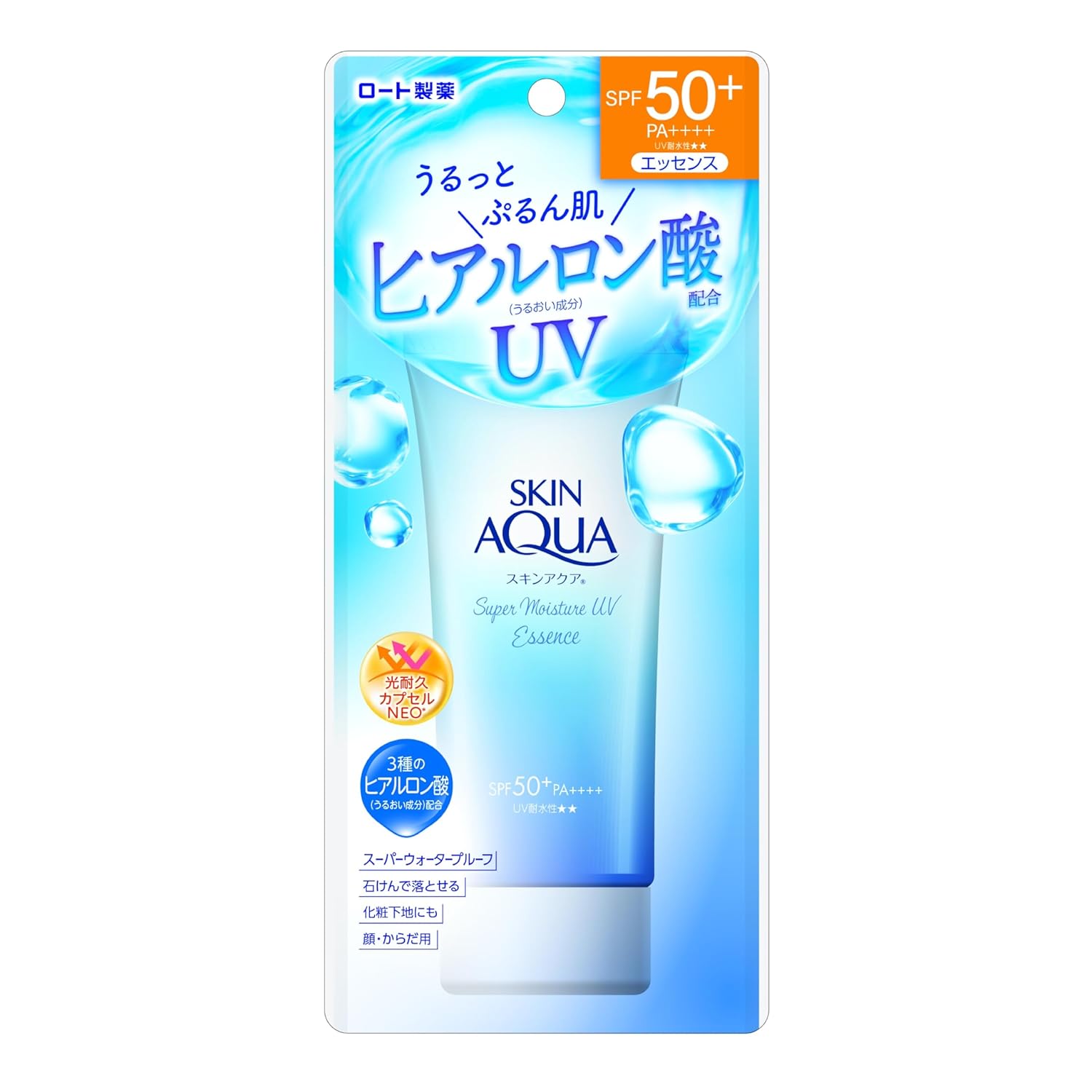
The older non-tinted option in the lineup. More hydrating than both Biore and the Tone Up, with no color correction. If your skin is dry and you want moisture plus protection without any tint, this is the classic choice.
Skin Aqua UV Super Moisture Gel SPF50+/PA++++
A gel format in a larger bottle, designed for body use. Lightweight and easy to spread over large areas.
Skin Aqua UV Super Moisture Milk SPF50+/PA++++
A milky, slightly more durable texture. Better sweat resistance than the essences and gels. The Skin Aqua option closest to Anessa territory (though still not a substitute for a true sport sunscreen).
Which One for Your Skin Type?
Oily Skin
First choice: Biore UV Aqua Rich Watery Essence (2025). The silica in the reformulation helps absorb excess oil, and the finish stays comfortable through humid days.
Alternative: Skin Aqua Serum UV (2026). Despite being marketed for dry skin, the dewy-but-not-greasy finish works surprisingly well on oily skin. r/AsianBeauty users in tropical climates report good results.
Avoid: Skin Aqua Super Moisture Barrier UV Gel. Too emollient for oily skin.
Dry Skin
First choice: Skin Aqua Serum UV (2026). Three types of hyaluronic acid, alcohol-free, and a hydrating finish that doesn’t dry out tight, dehydrated skin.
Alternative: Skin Aqua Super Moisture Essence SPF50+/PA++++. Similar hydration focus.
Avoid: Biore Watery Essence if your skin is very dry. The alcohol content can feel stripping on sensitive, dry skin.
Combination Skin
First choice: Biore Watery Essence or Skin Aqua Tone Up Lavender. Both sit comfortably in the middle ground: not too dewy, not too drying.
Sensitive Skin
First choice: Skin Aqua Serum UV (2026). No alcohol, no fragrance, no parabens, no mineral oil. The gentlest option between the two brands.
Avoid: Both Biore Watery Essence (alcohol + fragrance) and Skin Aqua Tone Up Lavender 2026 (alcohol + fragrance + pigments).
Deep Skin Tones
First choice: Biore Watery Essence or Skin Aqua Serum UV. Both are completely invisible with zero tint.
Avoid: Any Skin Aqua Tone Up variant (lavender, blue, mint, pink). The color pigments are designed for fair to medium skin and will leave a visible cast on deeper skin tones.
How They Compare to Anessa
People always ask whether they should just get Anessa instead. The answer depends on what you’re doing.
Anessa Perfect UV Sunscreen Skincare Milk SPF50+/PA++++ is a different product category. It’s a sport sunscreen engineered for maximum water, sweat, and friction resistance. Anessa uses a self-repairing UV film that strengthens when it contacts water or sweat. It costs roughly 2 to 3 times more than Biore or Skin Aqua.
When Anessa makes sense: Beach days, outdoor sports, all day outdoor events, tropical vacations, or any time you’ll be sweating heavily and can’t reapply constantly.
When Biore/Skin Aqua make sense: Commuting, office work, daily errands, casual outdoor activities, indoor days where you still want UV protection near windows.
Most people don’t need Anessa-level protection for daily wear. Biore and Skin Aqua are designed to be comfortable enough that you’ll put them on every single morning without thinking about it. That consistency matters more than maximum protection on a single day.
For a full breakdown, see Anessa vs Biore.
What the Community Says
These two sunscreens have been discussed in thousands of threads across r/AsianBeauty, beauty forums, and review sites. The consensus tracks with what the formulas suggest:
Biore Watery Essence is the “can’t go wrong” pick. It’s recommended so consistently that it’s almost a meme. The 2025 reformulation earned good reviews from oily-skin users who found previous versions too emollient by afternoon. The only common criticism: the alcohol and fragrance can irritate sensitive skin.
Skin Aqua Tone Up Lavender gets passionate fans who love the brightening effect. “It makes me look alive before I’ve even had coffee” is a real sentiment. The equally common caveat: it doesn’t work on every skin tone, and people who try it on deeper skin are often disappointed by the ashy cast.
Skin Aqua Serum UV is a newer favorite, with users praising the alcohol-free, fragrance-free formula. Multiple reviews note it works better on oily skin than expected, with one popular thread calling it “more elegant than Biore” for daily wear.
On @cosme, Japan’s largest beauty review platform, both the Biore Aqua Rich line and Skin Aqua Tone Up consistently rank in the top sunscreen categories, with ratings in the 4.5 to 5.5 range (out of 7). Neither dominates; they trade positions seasonally.
Price Comparison
| Product | Size | Japan Price | Price per gram |
|---|---|---|---|
| Biore Watery Essence (70g) | 70g | ¥968 | ~¥13.8/g |
| Biore Watery Essence Fresh Pouch | 120g | ¥1,317 | ~¥11/g |
| Skin Aqua Tone Up Lavender | 80g | ~¥740 | ~¥9.3/g |
| Skin Aqua Serum UV (2026) | 70g | ¥1,320 | ~¥18.9/g |
Skin Aqua Tone Up Lavender is the best value per gram. The Biore Fresh Pouch format is the best value in the Biore range. Skin Aqua Serum UV is the priciest of the group, justified by the alcohol-free, fragrance-free formula with triple hyaluronic acid.
Outside Japan, import prices vary. Expect to pay $10 to $18 for any of these depending on the retailer. Both brands are widely available through Japanese beauty importers like Dokodemo, YesStyle, and Amazon Japan sellers.
The Bottom Line
There is no single winner. These are both excellent sunscreens that lead their category for a reason.
Get Biore Watery Essence if you want a completely invisible, universally flattering daily sunscreen. It works on every skin tone, under any makeup, and the 2025 version handles oily skin better than ever. It’s the safe choice. You’ll like it.
Get Skin Aqua Tone Up Lavender if you want your sunscreen to do double duty as a brightening base. Fair to medium skin tones get the most out of the color correcting effect. It’s cheaper per gram and gives you that “put together” look without wearing makeup.
Get Skin Aqua Serum UV if you have sensitive skin, hate alcohol and fragrance in sunscreen, or want the most hydrating formula of the bunch. It’s the newcomer that’s earning its reputation fast.
Get Anessa if you need real outdoor protection. Different product, different purpose.
All of them are under $15 in Japan, all of them are SPF50+ PA++++, and all of them feel better than whatever Western sunscreen you’ve been grudgingly wearing. The best sunscreen is the one you’ll put on every morning. Pick the one that fits your skin and your routine.
Related: Best Japanese Sunscreen · Anessa vs Biore · Skin Aqua Tone Up Review · Skin Aqua Complete Guide